There is a reason the most memorable Los Angeles estates stage a quiet conversation between flame and flow. Fire cuts a clean line against the night sky, water softens edges and holds the light. Put them together, and a backyard stops being a collection of amenities and starts reading as architecture. At Ridgeline Outdoor Living, we design these pairings to work with the way Angelenos actually live. Pool parties in November happen here. Marine layers roll in off the Pacific, and then give way to heat that lingers until midnight. Hillside parcels reward views yet demand restraint. When fire and water features are composed with this context in mind, they look inevitable rather than added.
Designing for Los Angeles, not a catalog
Temperatures swing, but rarely plunge. landscaping guides That favors year‑round entertaining, long shoulder seasons, and spaces that transition from brunch to after hours without a shuffle of furniture. It also means thinking about Santa Ana winds that can stir embers, strict water conservation rules that influence hardware choices, and geology that changes from decomposed granite in the Valley to silty clay in Brentwood flats. A hillside in Studio City will ask for a different footing detail than a flat acre in Hancock Park. Permits vary by jurisdiction, and so do setbacks for open flames.
Our design practice starts with circulation, then frames. We pull the longest view line and work back: a linear fire sets scale, a water wall throws white noise to mask traffic, a runnel threads the two and suggests a path. Materials serve the frame. Cast in place concrete, basalt, splitface limestone, patinated copper, porcelain plank pavers that stay cool underfoot. Gas supply sizing and recirculation loops are nonnegotiable. Aesthetics should not fight physics.
A quick planning checklist
- Document prevailing wind, neighbor exposure, and view corridors before committing to flame positions. Verify gas capacity at the meter; many estates need a dedicated line for fire features and outdoor kitchens. Test water pressure and specify variable speed pumps for water features to fine tune sound and flow. Budget for automation; app‑based control of valves, ignition, and lighting increases use and safety. Consider maintenance access early, including traps, cleanouts, and removable panels.
Fifteen fire and water concepts we love to build
Linear fire ribbon kissing a wet edge
A straight flame line paired with a pool wet edge remains one of the most elegant moves on a modern property. The geometry is simple, the effect is not. We often elevate the fire tray two to four inches above the coping, set it inside a recessed channel, and run a narrow wet edge parallel to it. From most angles, flame and water appear to merge. With porcelain or acid‑etched concrete, the reflection throws a second ribbon into the scene.
In LA, cross‑breezes can distort a long flame. We specify wind‑rated burners, tempered glass wind screens no higher than eight inches to protect sightlines, and smart ignition tied to wind sensors. Expect $8,000 to $25,000 for a 10 to 20 foot line including gas work, masonry, and automation, exclusive of pool construction.
Sunken lounge wrapped by a rill
Conversation pits returned for a reason. When dropped a step or two below grade and wrapped by a shallow rill, they collect people and give the fire a stage. We design the rill at 12 to 18 inches wide, two to four inches deep, with a black plaster or dark porcelain bed to amplify reflections. Water circulates quietly around the seating, broken by a single scupper that sets the only audible note. The fire, either a linear ribbon or a circular pan, anchors the center.
On hillside parcels, a sunken lounge adds complexity. We pin the outer retaining edge to bedrock or engineered fill, pocket a French drain behind the wall, and run the rill on its own level pad. Done correctly, the pit stays dry in a storm and the water stays where it belongs.
Baja shelf with floating fire bowls
Shallow tanning ledges became standard on luxury pools, and they pair beautifully with fire when done with restraint. We favor low, wide fire bowls on narrow pedestals that seem to float just above the shelf. Gas is sleeved under the shell during pool construction, with quick‑disconnects concealed in serviceable niches. The bowls sit outside the primary swim path to keep soot off white plaster.
Materials matter. Concrete composite bowls hold up better near salt systems than some metals, though architectural bronze can be used with proper clearances. Lighting under the shelf turns the whole composition into a lantern. This is a relatively modest upgrade that reads expensive.
Vanishing edge facing a fire wall
On lots with a city view, we run the pool’s vanishing edge toward the skyline and build a minimalist fire wall on the opposite side. The eye alternates between moving water and steady flame, which compresses space in an interesting way. The fire wall can be nothing more than a four foot high, twenty foot long cast‑in‑place plane with a narrow slot burner, clad in basalt or board‑formed concrete.
Wind again is the enemy. We tuck the wall into a planted berm or use a louvered detail that passes air without turbulence. In Bel Air and the Hollywood Hills, we also model sightlines from downhill neighbors to ensure the flame does not glare into a bedroom window. That courtesy tends to make HOA conversations much easier.
Fire over water illusion
The trick is simple. Create a shallow water basin no deeper than three inches and run a cantilevered fire tray above it. From standing height, the flame appears to burn on the water. We place the basin tiles on a slight angle to enhance reflection and add a thin laminar feed to keep the surface glassy.
Because this feature puts flame near a water surface, it encourages guests to linger. We spec non‑slip porcelain and reduce overhangs where bare feet traverse. Integrated, dimmable LED lines under the tray add a soft halo at dusk that doubles the drama without visible fixtures.
Courtyard rill culminating in a fire orb
For estates with a formal entry court, a runnel that threads from gate to front door can become a quiet signature. End it at a simple stone plinth with a fire orb, and the entry holds warmth on cool evenings. The water runs on a 1 to 2 percent slope, fed by a hidden reservoir with an auto‑fill tied to a backflow preventer.
Because this sits at the front of a home, we temper the flame and choose media that reads refined. Black fire glass is a safe choice, but we sometimes use tumbled lava in custom sizes for a softer look. A sealed system keeps maintenance low, and the whole feature sips water. It aligns with a water‑wise ethos without telegraphing austerity.
Spa spillway framed by dual fire pedestals
The classic spa spillway earns presence when bookended by two fire pedestals set just proud of the spa face. Think 24 by 24 inch columns, 36 inches tall, clad in the same stone as the pool beam. The spa’s spill over detail becomes a central note, while fire marks the edges like parentheses. At night, steam, light, and flame read as a single composition.
We isolate the spa equipment hydraulically to give the spillway a separate variable speed control. With a VFD pump, you can set the spill to whisper during a dinner party and climb to a hush that drowns out street noise on a Saturday morning.
Reflecting pool with movable fire plinths
On large properties, a shallow reflecting basin near the main entertaining terrace creates calm. Add small, wireless, battery‑ignited fire plinths that lock into low‑profile docking points, and you gain flexibility. For a gala, scatter three plinths along the axis. For a quiet evening, bring two close to the seating edge. The docks carry gas, so ignition is reliable and safe.
The basin must be dead level to hold a true reflection. We shoot tight grades, pour on a stable base, and specify tile with low warp. A dark, honed porcelain or basalt helps the fire look sculptural.
Fireplace with a blade fountain return
Sometimes a full masonry fireplace still makes sense. In LA, smoke ordinances complicate wood burning, so we stick to gas and integrate a blade fountain in the side return wall. The water blade throws a clean sheet nine to twelve inches from the wall into a narrow trough, creating a cool counterpoint to the hearth’s heat.
This move works near outdoor dining spaces. A low, controlled water sound softens conversation, while the fireplace anchors the far end of the table. If you are asking, How much does an outdoor kitchen cost in Los Angeles, add a stone fireplace with a blade fountain and the project budget climbs, but the return in use and perceived value is high when executed well.
Copper scuppers over a linear fire bench
A raised bond beam with copper scuppers can align over a long, low fire bench at grade. The water falls through air before meeting stone, while flame slices along the foot. Copper ages, the water patinas the face, and the whole wall gains character after a year outdoors.
To keep patina controlled, we pre‑treat scuppers and plan drip edges. Burners are set back from splash to reduce mineral spotting on media. If you plan to pair with artificial turf, keep heat boundaries in mind. Turf melts under intense radiant heat. We pull turf back a foot or specify high heat‑tolerant varieties and interpose a porcelain border. For those weighing artificial turf vs sod, know that fire features push us toward hardscape or planting buffers.
Kinetic water sculpture with perimeter fire jets
When a client wants theatrical, we sometimes bring in kinetic water elements that trace arcs, then outline the perimeter with small gas jets integrated into the paving. The jets run slender, in the two to four inch range, whispering up among the stone joints. The water arcs and the fire dots can alternate or sync in patterns.
Control matters here. We tie both systems into automation, with lockouts that kill fire if moisture sensors detect overspray. It is a small, critical detail that keeps stone clean and guests safe. Think of this as an outdoor entertainment feature that earns its keep during events but dials down to background on a weekday evening.
Runnel grid intersecting basalt fire columns
For large terraces with minimal furniture, a grid of water runnels at floor level can activate space without clutter. At selected intersections, we set basalt fire columns drilled for gas. The water slides beneath the flame, and the pattern gives structure to an otherwise open plane.
Los Angeles hardscape supply carries a range of dense basalts that resist staining. We flame finish tops to add traction and keep colors in the cool gray to charcoal family so that the grid recedes underfoot. This is a case where paver patios vs stamped concrete is not a close call. Precision matters. We use large format porcelain or cast slabs with tight tolerances so lines remain sharp over time.
Outdoor bar with waterfall counter and linear fire
As outdoor kitchen trends Los Angeles homeowners are choosing lean toward full bars with refrigeration, we have been building waterfall counters that drop into a small, recirculating knife‑edge channel, paired with a low linear flame along the guest side. Think 14 feet of stone, a two inch sheet of water slipping into a reveal, and a soft fire line at knee height.
Lighting under the counter lip steals the show, especially when tuned warm. How much does an outdoor kitchen cost in Los Angeles depends on scope, but a serious bar with this feature set typically runs $60,000 to $150,000 including utilities, appliances, and finishes. The perceived luxury, compared to a dry bar with a standard island, is out of proportion to the delta in cost.
Entry stepping stones over water with torch beacons
Few moves set a tone like approaching a front door over broad stepping stones that hover above water. We work them at a comfortable 24 to 30 inch tread, spaced with two to four inch water gaps, and add slim torch beacons set well off the path. The flame draws the eye, while the water keeps the composition quiet.
Safety is easy to overlook here. Stones must be non‑slip, especially in morning dew. We slightly pitch each tread for drainage and add a hidden French drain at the basin’s perimeter to carry overflow during storms. The beacons get wind‑tested at install and set lower than you might expect to avoid glare in an arriving driver’s eyes.
Rooftop plunge with fire rail
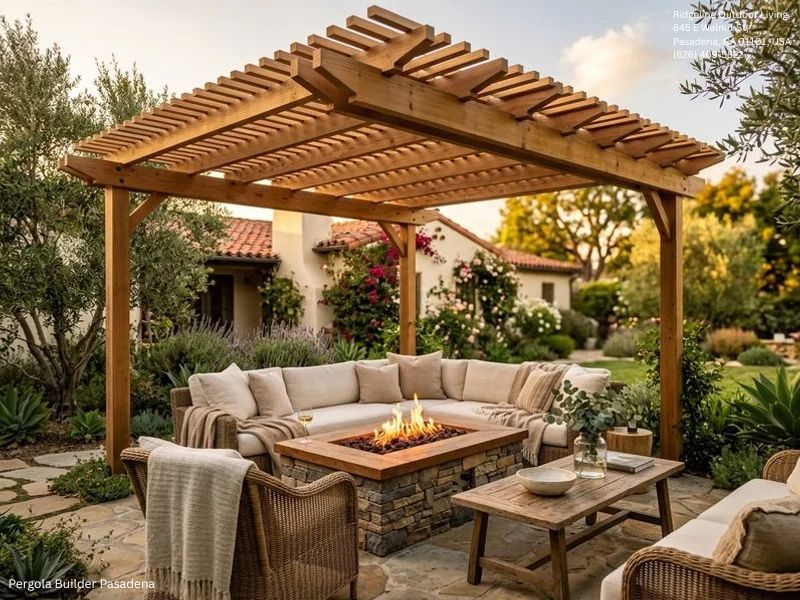
Rooftops offer different physics. Wind is higher, weight is critical, and neighbors are closer. A small plunge pool or spa on structure gains presence when paired with a low, continuous fire rail protected by glass. The glass doubles as a wind break, and the flame pulls the skyline into the water after dark.
Structural engineering drives this feature. We coordinate with the residence’s steel to spread loads, keep mechanical on vibration isolators, and route gas in a way that meets code and practical serviceability. The effect, when done right, feels like a hotel in your own home.
Material intelligence and the LA palette
Taste is local. In Los Angeles, we see palettes coalesce around several families: creamy limestones and oak for Santa Monica and Pacific Palisades, charcoal basalts and white stucco in the Hills, terracotta notes and bronze flats on the Eastside. Fire glass has its place, but oversized lava lends a more natural texture outdoors, and stays cooler to the touch. Porcelain pavers continue to outperform in high traffic areas, with cool‑touch finishes that beat natural stone on August afternoons.
Stamped concrete still appears on some bids as a cost saver, but the joints and patterns struggle to sell luxury. If you want value without apology, look at modular concrete pavers in large formats set over permeable bases. That choice also supports drainage, a subject too often ignored until the first storm. French drains explained simply are trenches with pipe and gravel that move water away from structures; we integrate them behind walls and beneath terraces so your water features are the only water you ever notice.
Water and fire in a drought‑aware city
Drought‑tolerant landscaping in Los Angeles is no longer a niche preference. It is the baseline. The good news is that water features in closed loops, with auto‑fill and covers, use far less water than most people assume. Evaporation is the main loss. With wind breaks, dark finishes, and correctly sized surfaces, we keep that loss within a reasonable band. Plantings around these features lean on the best drought‑tolerant plants for Los Angeles yards: Anigozanthos varieties near radiated heat, Lomandra breeze grass to soften hard edges, and sculptural Agaves set back from splash zones.
If you crave a resort‑style backyard at home, fire and water do the heavy lifting. Add low voltage lighting done right and the nighttime experience matches the day. The top outdoor lighting ideas for Los Angeles landscapes avoid glare and layer light at three heights: ground, eye, and canopy. We place fixtures where they light surfaces rather than bulbs, and we zone them with the fire to control harmonic warmth.
Codes, safety, and the unglamorous musts
The engineer’s notes rarely make Instagram, yet they decide whether a feature endures. Wind ratings on burners, setback distances from structures, clearance from combustibles, and seismic anchorage are baseline. Gas shutoff valves should be reachable and labeled. Water feature reservoirs need safe overflow routes and backflow protection.
A few rules of thumb help during early planning:
- Set open flames at least 10 feet from combustible structures unless protected by noncombustible walls. Confirm available gas BTUs; large estates often need 500,000 BTU or more across pool, spa, kitchen, and fire features. Use wind‑rated burners and glass screens where prevailing winds exceed 10 to 15 mph. Add GFCI protection and bonding for all water feature pumps and lighting within code distances. Tie all elements into a single automation platform for fast shutdown and scene control.
Costs, value, and where to invest
What does hardscape construction cost in Los Angeles is a perennial question. For context, simple linear fire features usually start around $6,000 to $8,000 and climb with length and cladding. Architecturally integrated water walls range from $15,000 to $60,000 depending on height and finish. Combined fire‑and‑water features often land between $20,000 and $120,000 as part of larger builds. Outdoor kitchens with bars, pizza ovens, and chilled storage in high‑end finishes routinely fall between $60,000 and $150,000. These are ranges, not promises, and site conditions, access, and jurisdictional requirements can swing numbers.
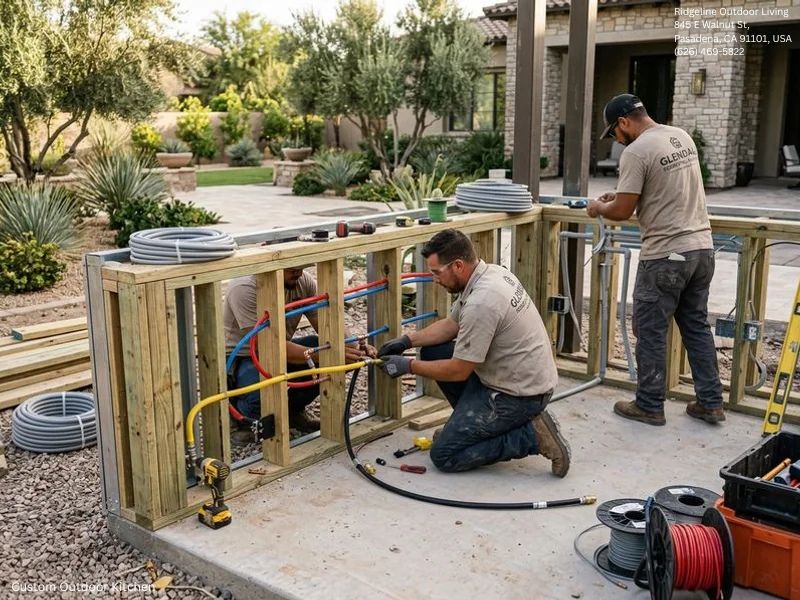
From a property value perspective, the 10 hardscaping features that increase property value revolve around utility married to design. Fire and water rank near the top when they are integrated rather than tacked on. Buyers in LA read permanence. They notice a proper footing, monolithic pours, tight stone joints, and balanced sound. If you are considering 10 backyard upgrades worth the investment, a signature fire and water piece will outlast portable furniture and seasonal plantings by decades.
Business Name: Ridgeline Outdoor Living
Address: 845 E Walnut St, Pasadena, CA 91101, United States
Phone: (626) 469-5822
Ridgeline Outdoor Living
Ridgeline Outdoor Living is a Pasadena-based landscape design-build company serving Greater Los Angeles with custom outdoor living, hardscape, and drought-tolerant landscape solutions. The company specializes in patios, retaining walls, outdoor kitchens, drainage, hillside projects, and turnkey landscape construction, handling projects from design and permitting through final build and warranty.
845 E Walnut St, Pasadena, CA 91101, USA
Business Hours:
- Monday – Saturday: 8:00 AM – 6:00 PM
- Sunday: Closed
Follow Us:
Hillsides, retaining walls, and gravity
Many of the best views sit on slopes. Retaining walls for hillside properties come with rules that keep you safe. The weight of water and the uplift of fire’s heat each demand stable backings. We often run geogrid, over‑excavate and replace, and pin walls with helical anchors where soils require it. Drainage is not optional. Behind every wall sits a drain mat, a perforated pipe to daylight or sump, and a filter fabric to keep fines from clogging the system. When heavy rains come, common landscape drainage problems and their solutions are only problems for those who did not plan at the start.
A hillside fire bench is tempting. To do it right, we bring a structural engineer in early, model the bench, and keep fuel runs accessible within service chases. That diligence also makes permitting faster, particularly in cities that require structural peer review. Ridgeline’s approach to design‑build landscaping revolves around these integrations, since changing a footing after finishes go in is both expensive and demoralizing.
Maintenance, longevity, and the quiet chores
Owning these features should not feel like a part‑time job. Automation helps. So do good details. We seal porous stone where appropriate, specify media that can be cleaned with a vacuum and a soft brush, and choose burners with readily available parts. Auto‑fills combined with level sensors keep water features from running dry. Backflow preventers satisfy code and protect your drinking water. We plan for service access that a real human can use, not a gymnast.
If artificial turf sits nearby, we educate clients on radiant heat zones and recommend a quick sweep of embers after a breezy night. For sod lovers, we pull grass back from fire features and transition to gravel or groundcover that does not singe. patio hardscaping Pasadena The debate of artificial turf vs sod is not theoretical when flame enters the conversation. The right answer depends on use, heat, pets, and the look you prefer.
How the pieces add up
When a backyard is staged as a sequence rather than a cluster, guests feel led without being herded. Fire and water serve as pivots in that sequence. They draw people to the edge of a view, keep them longer at a table, and anchor memories. Whether you choose a linear fire ribbon along a pool’s wet edge or a courtyard rill that greets guests at the door, the principle is the same. Edit ruthlessly, build with intention, and let the materials carry the day.
Ridgeline Outdoor Living designs stunning outdoor spaces by starting with the way you live, then calibrating the mood with flame and flow. If you picture your estate hosting fifty under the stars or five on a Tuesday, there is a fire and water composition that fits. It will look simple. It will not be simple. But that is the point of craftsmanship.