Los Angeles rewards any homeowner who invests in outdoor living. Sunny days, marine layers that fade into warm evenings, and hillsides with long views all make a strong case for treating the backyard as the real living room. Over the last decade, I have watched modest patios turn into open air suites that rival boutique hotels. The clients who get the most out of their projects start with a simple question: what does resort luxury look like for my life, on my lot, with my budget and maintenance appetite? The answers vary, but the building blocks repeat. Here are Ridgeline’s ten most effective ideas for transforming a backyard in Los Angeles into a calm, high performing retreat.
1) Paver terraces that handle life’s traffic
A great resort knows how to move people without them noticing. Paver patios do the same at home. Properly built, a paver terrace feels tailored, sheds water cleanly, and survives dinner parties, kids’ scooters, and the occasional wine spill. On design days, I often pull out a folder labeled 15 Paver Patio Designs Los Angeles Homeowners Love because the slightest pattern shift changes the mood. Herringbone adds energy near a grill line, stacked bond creates a quiet lounge pad, and large-format porcelain pavers elevate a pool surround into gallery space.
Costs vary with the paver material, base prep, and access. As a ballpark for Los Angeles, most homeowners invest between $22 and $45 per square foot installed for concrete pavers, with porcelain and natural stone ranging higher when site conditions demand more extensive base work. The extra line item many people forget is edge restraint and joint stabilization, which are not the place to cut corners. A few thousand dollars well spent there keeps your layout tight and level.
For sloped lots, terraced patios paired with low retaining walls unlock space you did not know you had. If you are comparing Paver Patios vs Stamped Concrete, pavers usually win on repairability and traction. Stamped concrete can look fantastic on day one but becomes hard to patch invisibly and turns slick when sealed heavily. In high sun zones, lighter pavers reduce surface heat and help your bare feet thank you in August.
2) Outdoor kitchens that cook and host
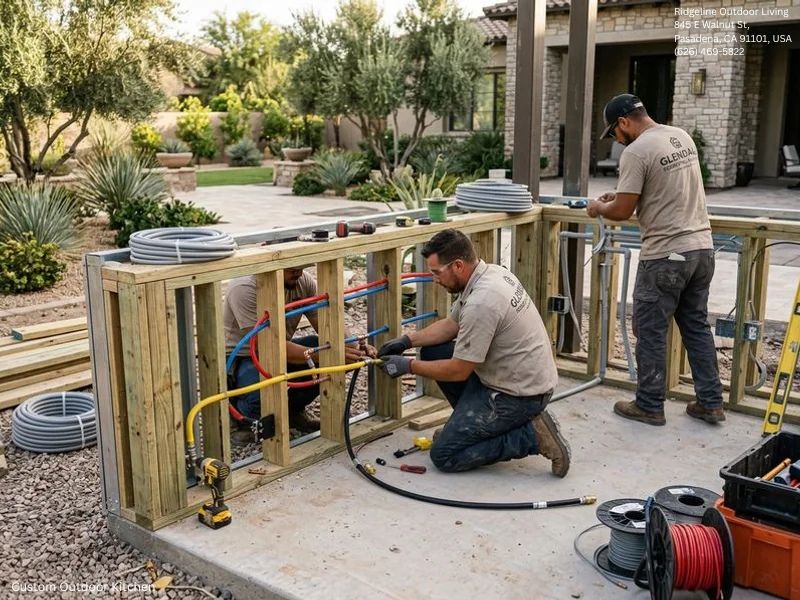
If there is a single feature that switches a yard from “nice” to “how soon can we come back,” it is a well planned outdoor kitchen. The form can be modest - a 10 foot run with a quality grill, a drawer fridge, and trash pull - or expansive with a pizza oven, sink, icemaker, and seating wrapped around a peninsula. We prepare cost ranges carefully during design because the spread is wide. How Much Does an Outdoor Kitchen Cost in Los Angeles? Basic, built in grill stations generally start near $15,000 to $25,000. A fully realized kitchen with stone veneer, porcelain counters, gas, electrical, drainage, and premium appliances commonly lands between $35,000 and $85,000. Custom roof structures, remote locations far from utilities, or imported appliances can push well past $100,000.
Form follows function. If you love wok cooking, specify high BTUs and ventilation planning so smoke moves up, not across your guests’ faces. If you bake, allocate a 30 inch clear zone next to the oven for trays. I am partial to raised bars only when there is a view to perch on. Otherwise, a single height counter gives more prep space and encourages conversation. For the curious, Ridgeline Outdoor Living’s Guide to Outdoor Kitchen Design starts with workflow, not appliance catalogs, and ends with service clearances so maintenance does not require disassembling your countertop.
3) Water that looks and sounds like a vacation
Not every property needs a pool, but every luxury backyard benefits from intentional water. The trick is proportion and sound. A sheet fall from three feet produces white noise that drowns nearby traffic. A rill with river pebbles offers small, articulate notes that pair well with a reading nook. In neighborhoods where space is tight, we often reach for compact features from the playbook of 12 Water Feature Ideas for Luxury Los Angeles Backyards: basalt column bubblers grouped in threes, a tiled wall blade near the dining terrace, or a modern trough that doubles as a planter under olive trees.
Maintenance is reasonable if you design for access. Skimmer baskets placed against a wall you can reach in seconds make weekly checks painless. LED submersibles now run cool and efficient, letting you accent movement without raising the power bill. In wildfire zones, recirculating features with auto-fill valves and metal mesh screens are safer choices than open basins with leaf load.
4) Fire that extends the season
Los Angeles allows landscaping guides you to host outdoors all year if you chase the chill out of the air. Gas fire bowls, linear fire tables, or masonry fire pits turn shoulder season into comfortable evenings. Among the 12 Backyard Fire Pit Ideas for Entertaining Year-Round that clients love, linear flames along a bench edge do two jobs at once, seat and heat. Round pits on gravel pads invite people to linger well past dessert. If you go gas, run a sleeve under patios before pouring or compacting. Retrofitting a gas line under finished hardscape is both expensive and frustrating.
Clearances are not negotiable. We set fire elements at least six to eight feet from combustible structures, and we use wind guards on linear burners where canyon gusts are common. For wood burning pits, check local advisories and be honest about your tolerance for ash and smoke drift. Gas is cleaner and easier to control in dense neighborhoods.
5) Planting with less water and more character
Resort luxury relies on coherence. Drought tolerant does not mean sparse. The Ultimate Guide to Drought-Tolerant Landscaping in Los Angeles reads like an invitation to texture: leathery agaves against billowing muhly grass, citrus in tall glazed pots, rosemary clipped along a path, and the occasional sculptural tree that throws dappled shade on stone. The Best Drought-Tolerant Plants for Los Angeles Yards always start with a site conversation. Coastal sun, valley heat, and foothill frost are different animals.
If you are torn between lawn look and water bills, Artificial Turf vs Sod: What’s Best for Los Angeles Homes? Hinges on use. Families with rough-and-tumble play often prefer durable synthetic turf with good infill and a drainage mat. Expect a quality installation to run $14 to $22 per square foot in most LA settings, depending on access and base work. For natural grass, warm season varieties like hybrid Bermuda use less water once established but do go dormant in cooler months. Some clients split the difference and install a 300 to 500 square foot turf panel framed by decomposed granite, which gives the dog a run and preserves most of the yard for low-water planting.
6) Shade that looks intentional
The two structures that define shade strategy are pergolas and covered patios. I am asked weekly which is right for a property. The answer depends on architecture, sun angles, and lifestyle. When we test options, we sketch both and study how the light falls in June at 4 p.m. And in January at noon. That usually settles the matter.
Here is a compact way to think through Pergolas vs Covered Patios:
- Pergolas filter light, grow greenery, and feel airy, ideal over lounges where you want dappled shade without enclosing the space. Covered patios provide full weather protection and allow fans, heaters, and lighting integration, best for outdoor kitchens and dining. Pergolas are typically lighter on permitting and costs, often from $8,000 to $25,000 depending on material and size. Covered patios with roofs and integrated utilities require more structure and engineering, with Los Angeles projects commonly landing between $35,000 and $120,000. In modern homes, steel or aluminum pergolas with adjustable louvers give the control of a roof without reading as heavy.
If you plan heaters, budget for electrical or gas routing early. Retrofits look bulky and spoil clean lines. And remember, shade trees remain the most beautiful long-term answer. A well placed Arbutus or Chinese pistache cools the yard while anchoring your composition.
7) Lighting that earns its keep
Resorts choreograph evening light so your eyes settle, not squint. At home, a thoughtful plan pays big dividends. Start with safety, then let the romance follow. Path lights every eight to ten feet are less important than lighting decision points - a step, a change in surface, a landing. I lean on soft, 2700K to 3000K color temperature for living areas, with cooler accents only on sculptural plants or water. With 10 Outdoor Lighting Ideas for Los Angeles Landscapes, less is more. Grazing a stucco wall reveals texture you otherwise miss. Downlights tucked into pergola beams cast pools of light on dining tables without blinding guests. A few moonlights placed high in a tree recreate the glow of a resort courtyard.
Avoid the 10 Outdoor Lighting Mistakes That Reduce Curb Appeal, especially the temptation to uplight every trunk on the property. Strong contrast creates drama; uniform wash flattens everything. Plan for serviceability by using junction boxes that remain accessible after mulch goes down, and specify fixtures with sealed optics to keep spiders and dust off your beam.
8) Grading, drains, and the peace of mind you cannot see
Luxury fails fast when water has nowhere to go. I have met too many homeowners who focus entirely on finishes and then call after the first December storm. How to Solve Common Yard Drainage Problems starts with respecting slope. A patio needs a minimum 1 to 2 percent fall away from the home. In tight lots, French Drains Explained: Protecting Your Property From Water Damage will likely be part of the design. Perforated pipe wrapped in fabric and set in washed gravel intercepts subsurface water and moves it to a collection point. In Los Angeles, expect $45 to $90 per linear foot for a professionally installed French drain, with costs climbing if demolition or deep cuts are required.
Downspout tie-ins, gravel trenches along retaining wall toes, and catch basins at the low points of turf panels all work together. The most common misses I see are flat areas at gate thresholds and planter beds crowned too high, which push water onto patios and right back to the house. If you notice any of the 10 Signs Your Yard Needs Better Drainage - standing water 24 hours after rain, moss where it should not be, fine sediment deposits on hardscape - plan fixes before finishing the pretty parts. It is cheaper to set the bones right than tear up a new terrace.
9) Hillside retaining and view stewardship
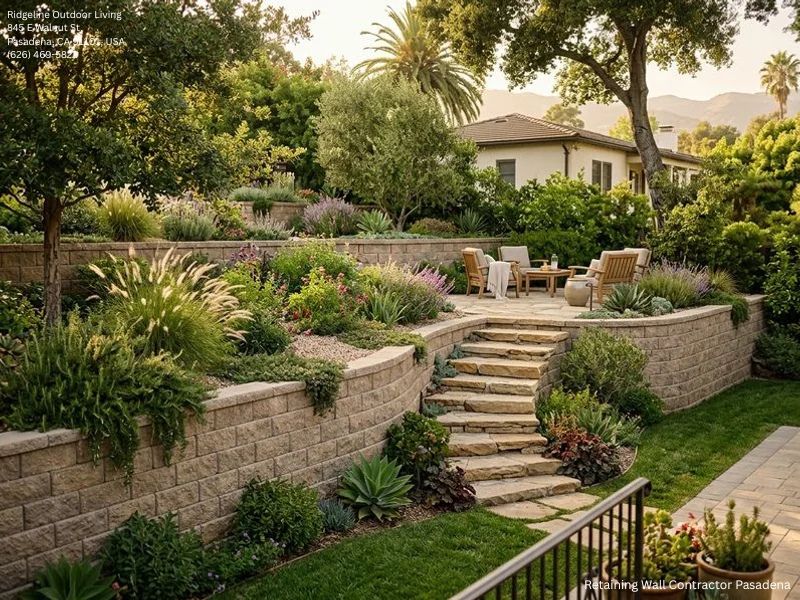
Ridgeline works across the basin, and with that comes slopes. Retaining Walls for Hillside Properties: What Homeowners Need to Know is rarely a light read, but the basics matter. Every wall holds back not just soil, but water load. Free draining backfill, weep holes, and geogrid where applicable keep walls safe and true. In Los Angeles, shorter garden walls may be built from modular block systems, but once you cross four feet in height, engineering enters the conversation. The Complete Guide to Retaining Walls in Los Angeles is part structural, part aesthetic. Veneer choices range from split face block to plaster to stone, each carrying different maintenance profiles.
Costing is sensitive to access and height. Small, decorative sitting walls might run a few hundred dollars per linear foot. Substantial engineered walls, with proper drainage and footings, often live in the $120 to $250 per square foot of face area range. On steep lots, stacking uses - a lounge on the upper terrace, a putting green on the next - is the surest way to turn a hillside from a liability into a luxury. Retaining walls also prevent erosion on hillside properties, safeguarding both neighbor relations and your investment when winter storms return.
10) Driveways and entries that feel like pulling up to a resort
First impressions count twice, once for pride and once for resale. The Most Popular Driveway Materials in Los Angeles are still concrete, pavers, and decorative gravel mixes. If curb appeal is your target, 15 Driveway Paving Ideas to Improve Curb Appeal deliver a surprising amount of character without regrading the entire front yard. Banding a plain concrete drive with stone, inserting a central ribbon of groundcover between tire tracks, or switching to a permeable paver field to cut runoff all change the arrival experience. Homeowners often budget between $18 and $38 per square foot for paver driveways, with premium stones higher. Permeable systems help satisfy stormwater requirements and keep surfaces cooler on summer afternoons.
Pair the drive with low, warm lighting and a planting palette that supports the architectural lines of the home rather than fighting them. The Best Hardscape Materials for Southern California Landscapes manage heat, resist staining, and survive the odd oil drip. Honed or flamed finishes underfoot minimize slips. A resort arrival never asks you to think about footing.
How to sequence a resort-style transformation without overwhelm
Most projects do not leap from sketch to full build in a month, nor should they. Good design breathes. When we plan 10 Ways to Create a Resort-Style Backyard at Home, we stage work so finished elements are protected and budgets stay rational. Start with civil items, grading, and utilities. Get the drainage right. Next, hardscape and structures set the skeleton. Then lighting conduit and sleeves, before plants and final finishes. Outdoor Kitchen Trends Los Angeles Homeowners Are Choosing - porcelain slab counters, matte black fixtures, hidden task lighting - make more sense when integrated early rather than bolted on late.
Here is a brief checklist to prepare for design-build:
- Map how you actually live outside today, and what you reach for on vacation that you miss at home. Set a realistic total investment range and a contingency for surprises, often 10 to 15 percent. Clarify priorities that deliver daily value, not just party tricks. Ask for phased plans if budget or permitting pushes you to build in stages. Verify drainage and utility upgrades are captured before finishes go in.
Value, cost, and where to put your dollars
10 Hardscaping Features That Increase Property Value in Southern California usually include outdoor kitchens, fire features, lighting, quality patios, and thoughtful plantings. Appraisers do not assign a dollar-for-dollar return to each line item, but buyers feel the difference between a yard that photographs well and one that lives well. What Does Hardscape Construction Cost in Los Angeles? As a frame, light refreshes with new planting, low voltage lighting, and a small patio addition might land in the $30,000 to $75,000 range depending on scope and access. Whole yard renovations with structures, large patios, kitchens, and walls routinely span $150,000 to $500,000 and beyond on complex hillside properties. Those numbers reflect real constraints: labor, engineering, permitting, utilities, and the simple reality of moving materials through tight Los Angeles lots.
Business Name: Ridgeline Outdoor Living
Address: 845 E Walnut St, Pasadena, CA 91101, United States
Phone: (626) 469-5822
Ridgeline Outdoor Living
Ridgeline Outdoor Living is a Pasadena-based landscape design-build company serving Greater Los Angeles with custom outdoor living, hardscape, and drought-tolerant landscape solutions. The company specializes in patios, retaining walls, outdoor kitchens, drainage, hillside projects, and turnkey landscape construction, handling projects from design and permitting through final build and warranty.
845 E Walnut St, Pasadena, CA 91101, USA
Business Hours:
- Monday – Saturday: 8:00 AM – 6:00 PM
- Sunday: Closed
Follow Us:
Where you spend matters as much as how much. Structure, drainage, and base work are the least visible but most important. A mid-tier grill on a bulletproof island beats a top-tier grill on a wobbly one. I once visited a home with a striking stamped concrete patio that had settled nearly an inch at the house. The homeowners faced demo to fix the slope. The savings on day one vanished. Why Professional Landscape Design Saves Time and Money is not an abstract idea. Details that avoid rework pay for themselves.
Entertainment features that quietly handle a crowd
Not every party needs a DJ, but if your yard handles ten people without friction, it can probably handle thirty with grace. 12 Backyard Entertainment Features Every Homeowner Should Consider includes a few unsung heroes. Consider a secondary drink station or undercounter fridge away from the cooking hub to reduce congestion. Use a low planter wall or bench along a path to create perches while keeping circulation open. Integrate a small storage cabinet for blankets near the fire pit, and plan low light near the pool equipment pad so you can read valves without a flashlight. Pool Landscaping Ideas for Los Angeles Homes often bring in slip resistant paths, shade zones for lifeguarding parents, and a planted screen to hide the equipment without suffocating it.
Audio matters too, but subtlety wins. A few landscape speakers set at modest volume create even coverage so no one corner blares. Run conduit during construction so upgrades later do not involve digging.
Working with slopes, setbacks, and neighbors
The Complete Guide to Hillside Landscaping in Los Angeles is really about respecting constraints and creating an experience that feels inevitable. 10 Hillside Landscaping Ideas for Challenging Properties range from switchback paths shaded with native oaks to cantilevered decks that hover among treetops. Always consider privacy and sightlines. A resort experience feels secure without reading as fortified. On narrow lots, lattice screens with climbing jasmine or passion vine give you a fragrant veil between seating areas and property lines. For view properties, low plantings and see-through railings keep the horizon in the frame. How to Choose the Best Retaining Wall Design for Your Property depends on code, loads, and the way your architecture wants to meet the land. Sometimes a green reinforced slope beats a vertical wall, particularly if you prefer a softer edge.
Smart water and smarter choices
15 Water-Wise Landscaping Ideas for California Homes prove that efficiency and beauty align. Drip irrigation with pressure compensation makes a measurable difference in plant health and water bills. Weather-based controllers that adjust daily save another slice without fuss. Grouping plants by water need reduces overwatering and the fungal grief that follows. For turf, if you stay natural, match nozzle precipitation rates and run cycles short and repeated to avoid runoff on clay soils. How to Prevent Yard Flooding With Proper Drainage Solutions ties back to the same systems: water that exits pots onto gravel, planter beds crowned away from house foundations, and bioswales where space allows.
Common Landscape Drainage Problems and Their Solutions are not glamorous, but every resort landscape team gives them constant attention. Make that mindset part of your home too. If a neighbor’s grading aims at your fence, diplomacy now beats erosion later.
Process, permissions, and the right partner
How Ridgeline Outdoor Living Approaches Design-Build Landscaping is straightforward: listen closely, iterate quickly in plan and elevation, and build like maintenance technicians will judge you in five years. Los Angeles permitting touches many projects, especially covered structures, electrical additions, and engineered walls. The right partner will guide you through plan check, inspections, and HOA reviews without drama. 10 Questions to Ask Before Hiring a Landscape Contractor should include license and insurance verification, a look at recent similar projects, and clarity about who will supervise your site day to day.
How Ridgeline Outdoor Living Creates Functional Outdoor Living Spaces is a mix of aesthetics and ergonomics. Step heights align, chairs slide under counters without banging knees, heaters warm bodies rather than air above heads, and every hose bib and outlet exists where you instinctively reach. When it all clicks, you stop noticing the feature list and start enjoying breakfast outside on a Tuesday.
A few missteps to avoid
Even strong concepts stumble if execution ignores the basics. 10 Backyard Renovation Mistakes to Avoid often reduce to the same themes. Do not overprogram a small space, which turns luxury into clutter. Do not skimp on shade, or your yard becomes a photo set no one uses at 2 p.m. Do not mix too many hardscape materials; two to three complementary tones keep the canvas calm. Avoid blue-tinted LEDs around warm toned stone. And never pour concrete over tree roots if you care about the tree or the slab.
When to say yes to upgrades
Outdoor Kitchen Features That Are Worth the Upgrade in our climate include a vented storage cabinet to keep cutting boards and linens clean, a sink with an air gap to meet code, and task lighting under counter lips. Why Los Angeles Homeowners Are Investing in Custom Pergolas is often less about status and more about control of light and heat. Adjustable louvers, integrated screens, or infrared heaters extend your use of the space by months. Designing the Perfect Outdoor Dining Space starts with circulation: at least 36 inches clear behind chairs and 48 inches where it is a main pass through. If a view competes with a grill, angle the table to settle the room.
12 Outdoor Living Features That Add the Most Value is not a fixed list, but across projects the quiet champions are lighting, shade, and surfaces that age well. 10 Backyard Upgrades Worth the Investment include irrigation zoning that can expand, upgradeable lighting transformers, and spare conduits under patios to future proof for a spa, a cabana, or a second fire feature down the line.
Bringing it all together
The most satisfying backyards read as one continuous idea. How Ridgeline Outdoor Living Designs Stunning Outdoor Spaces begins with a story we can test against every choice. Are we creating a hillside retreat that steps through native plant rooms, or an urban courtyard with Mediterranean notes and a strong evening life? Each idea on this list can be the centerpiece or a supporting act. Done together, they deliver the relaxed clarity of a resort, but tuned to your routines.
If you are standing in your yard, coffee in hand, trying to imagine what is possible, start with the bones: circulation, grade, utilities. Then choose one or two signature experiences - a water wall that hushes the street, a kitchen that replaces the one inside half the year, a shaded lounge that pulls friends together. Build from there with materials and plants that fit our sun and your schedule. The rest is practice and patience. A resort never tries too hard. It simply works, day and night.